A busy board is a flat panel with fastenings a child manipulates. A quiet book is a soft fabric or felt book with an activity on each page. A busy book is the umbrella term for any activity book that keeps hands occupied, in felt, paper or laminated card. The difference is format and portability, not purpose.
The three words get used interchangeably by sellers, which is why you can search for one and get results for all three. If you are trying to buy the right thing for a specific child, here is the distinction that actually affects your decision.
What is a busy board?
A busy board is a sensory activity panel — traditionally a plywood board with real hardware screwed to it: latches, bolts, light switches, zips, door chains, wheels. The appeal is that everything on it is a real object a child has seen an adult use, which is exactly the practical-life instinct Montessori educators care about.
Felt versions have blurred this. A “felt busy board” is usually a multi-page soft book that kept the word “board” for search reasons. If a listing says board, check whether it is a rigid panel or a soft book — the difference in weight and noise is enormous. Our guide to what a busy board is for babies covers the classic panel version in detail.
What is a quiet book?
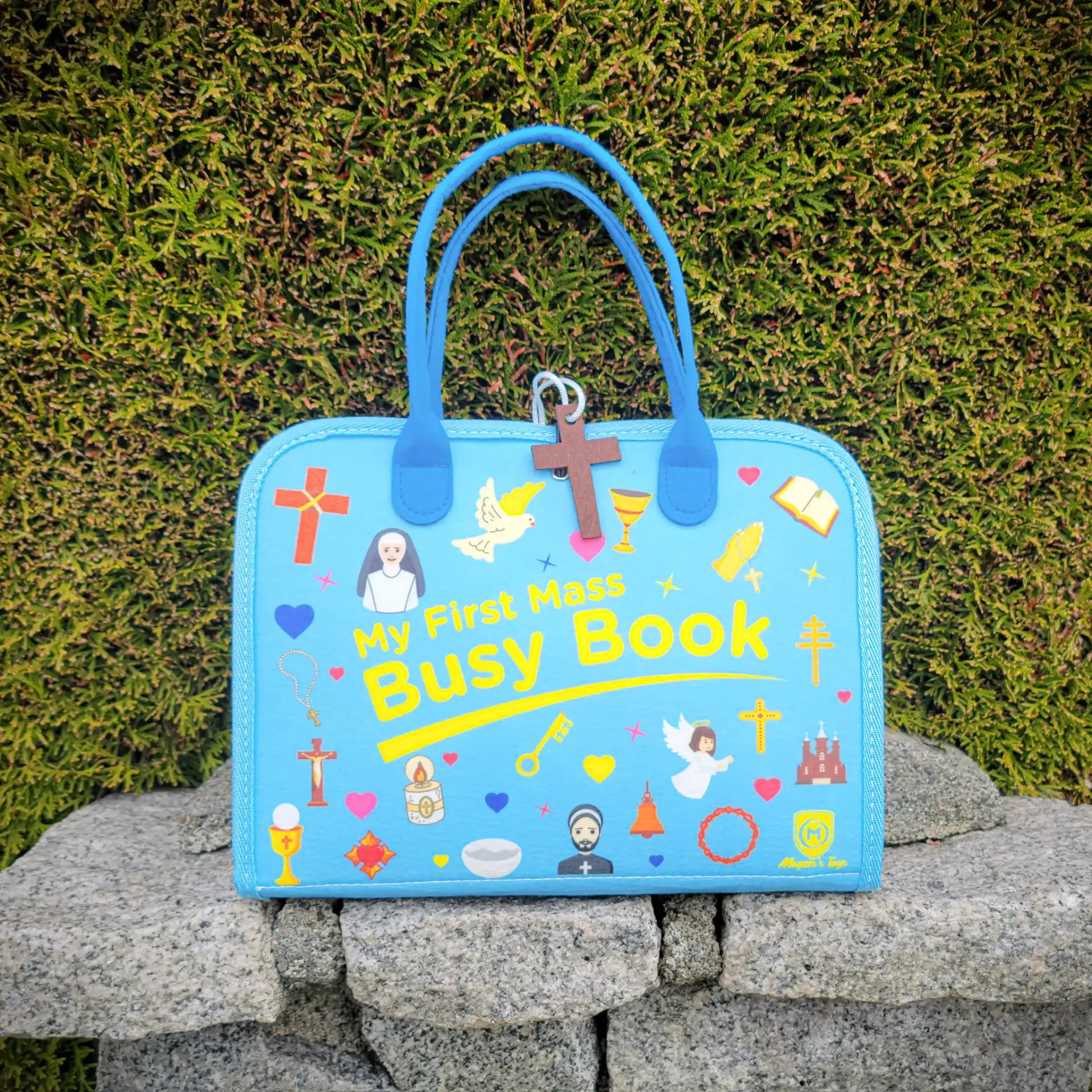
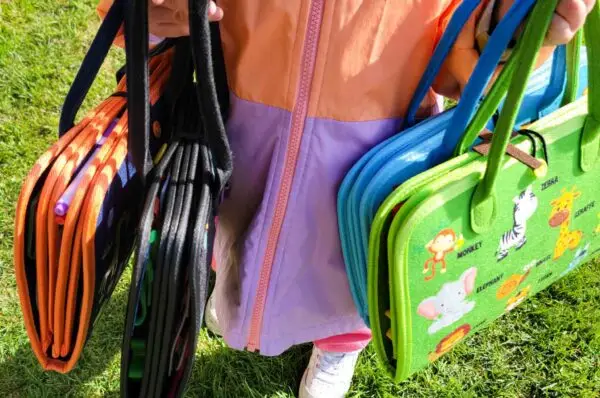
A quiet book is a soft, stitched book — felt or fabric — where every page holds one interactive task: buttoning, zipping, threading, matching, sequencing. The name describes the noise level, which is the whole point. Quiet books exist because there are places a child must be still and silent: a church pew, a plane, a waiting room, a sibling’s recital.
They also tend to be the most durable of the three formats, because there is nothing rigid to crack and nothing printed to scuff. A well-stitched felt book outlives most plastic toys bought the same year.
What is a busy book?
Busy book is the broadest term. It covers felt quiet books, laminated printable binders, and card-stock learning folders. In practice, when someone says “busy book” online they usually mean one of two things: a handmade felt book, or a printable PDF that parents print, laminate, cut and velcro into a ring binder.
The printable version is worth understanding as its own category. It is cheap — our printable Montessori busy book runs $12 for 81 activities — but the assembly is real work, and laminate is noticeably crinkly, which disqualifies it for the quiet-place use case that sells felt books.
Busy book vs busy board vs quiet book: side-by-side
| Busy board (rigid) | Quiet book (felt) | Busy book (printable) | |
|---|---|---|---|
| Format | Flat wooden or acrylic panel | Stitched soft book, 6–12 pages | Laminated pages in a binder |
| Best age | 10 months – 3 years | 18 months – 5 years | 2 – 6 years |
| Noise | Loud — clicks, latches, wood | Nearly silent | Crinkly laminate, loud velcro |
| Portable? | No — heavy and bulky | Yes — folds into a bag | Somewhat — binder is stiff |
| Main skills | Gross fine-motor, cause and effect, real hardware | Fine motor, sequencing, practical-life fastenings | Pre-academic: letters, numbers, sorting |
| Setup effort | None (or DIY build) | None | 4–8 hours of printing and cutting |
| Typical cost | $40–$150 | $25–$100 | $10–$20 plus supplies |
| Best for | Home, one fixed spot | Church, flights, restaurants, quiet time | Homeschool, multiple children, budget |
Which one is right for your child’s age?
- 10–18 months: busy board. At this age the win is cause and effect — press, slide, open, close. Books get chewed and the pages mean nothing yet.
- 18 months – 3 years: felt quiet book, with no small detachable parts. Fastenings, textures, simple matching. This is when portability starts to matter, because this is the age that makes restaurants hard.
- 3–5 years: quiet book or printable busy book. Sequencing, counting, first letters. Attention span is finally long enough for a multi-step page.
- 5+: printable binders and workbooks. Felt starts to feel babyish to most children around here.
The fine-motor argument holds across all three. Occupational therapists consistently point out that zipping, buttoning and lacing build the pincer grasp, bilateral coordination and motor planning that later underpin handwriting and self-dressing — so the format matters less than whether the child actually uses it. A beautiful board that lives on a shelf teaches nothing.
Are any of them actually Montessori?
This is where honest sellers and marketing part ways. Montessori educators are broadly sceptical of all three categories, and the criticism is specific: most busy boards and busy books present too many unrelated concepts at once, which fragments concentration instead of building it. Montessori for Today puts it plainly — many are simply too overwhelming to be Montessori-aligned.
The version that survives the critique has three traits: one skill per page, a built-in control of error so the child can self-correct without an adult, and content grounded in real life rather than fantasy. A page that teaches buttoning is Montessori-aligned. A page with a rocket, three colours, a counting activity and a googly-eyed alien is not, whatever the listing says.
Use that as a filter rather than trusting the word “Montessori” in a title. Our Montessori soft book benefits guide goes further into how to judge this from listing photos alone.
Which should you buy first?
Start from where the problem is, not from the product category.
- “He climbs everything and unplugs things.” Busy board. Redirect the impulse to something built for it.
- “We dread church, flights and restaurants.” Felt quiet book, every time. Silence is the feature you are paying for. Our Quiet Book Cube was built specifically for this.
- “I want to do letters and numbers at home.” Printable busy book. Cheapest way to cover a lot of pre-academic ground.
- “It’s a gift and I want it to feel special.” A personalised felt book or 12-page busy board — a name on the cover does more for gift-giving than an extra activity page.
Do you need all three?
No. Most families get more out of one good item used consistently than three mediocre ones in rotation. If you own two, make them a home item and a travel item — a board that lives in the play space, and a soft book that never leaves the nappy bag. That split covers almost every situation without duplicating skills.
One thing that genuinely helps regardless of which you choose: keep the travel item out of daily rotation. A quiet book used every afternoon at home is exhausted within a month; the same book reserved for outings keeps working for a year. For ideas on stretching that further, see our list of felt busy board activities for toddlers and the busy board benefits guide.
Frequently asked questions
What is the difference between a busy book and a busy board?
A busy board is a rigid panel with fastenings and hardware attached, meant to stay in one place. A busy book is a multi-page activity book, usually felt or laminated card, designed to be carried. Boards suit younger toddlers exploring cause and effect; books suit older toddlers who can work through pages.
Is a quiet book the same as a busy book?
Almost. Quiet book describes the format — soft, fabric, silent to use. Busy book is the broader umbrella that also includes printable and laminated versions. Every quiet book is a busy book, but not every busy book is quiet, and that difference matters if you need it for church or a flight.
Which is better for travel?
A felt quiet book. It folds flat, weighs almost nothing, makes no noise and has no parts that roll under an aeroplane seat. Rigid busy boards are too heavy and too loud for travel, and laminated printable binders are stiff and crinkly.
At what age should you start a busy board or busy book?
Busy boards work from around 10 months, once a child can sit and pull. Felt quiet books land best from 18 months, when matching and fastening become interesting. Printable busy books suit ages 3 and up, once a child can follow a two-step instruction independently.
Are busy books really Montessori?
Only some are. Montessori-aligned means one skill per page, a built-in control of error, and real-life content rather than fantasy. Many products labelled Montessori crowd several unrelated concepts onto a page, which works against concentration. Judge by page design rather than by the word in the title.
Do I need to buy all three?
No. Two is plenty for most families: one item that stays at home and one that lives in the bag for outings. Buying all three tends to duplicate the same fine-motor skills while splitting the child’s attention across items that each get used less.